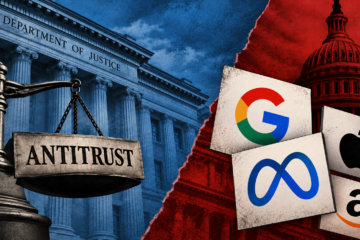
The American Innovation and Choice Online Act (AICOA) is back before Congress, and in a new RealClearMarkets op-ed, Market Institute Senior Fellow Norm Singleton argues lawmakers should finally let the legislation die.
Comparing the bill to Dr. Frankenstein’s infamous creation, Singleton writes that Senators Amy Klobuchar and Charles Grassley continue trying to revive legislation that would do more harm than good. He warns that AICOA would undermine popular online services, interfere with private business decisions, and ultimately raise costs for consumers and small businesses.
“AICOA would terrorize leading American technology businesses, as well as workers and consumers.”
Singleton explains that one of the bill’s central provisions would prohibit so-called “preferencing,” preventing companies from highlighting their own products and services on their own platforms. He argues this would be the online equivalent of forcing a grocery store to give its own store-brand products no preferred shelf space or requiring Walmart to display competing brands more prominently than its own.
The consequences extend beyond large technology companies. Singleton notes that Amazon’s ability to guarantee fast Prime delivery depends on requiring participating sellers to use its logistics network. Restricting those business arrangements, he argues, would make it more difficult for small businesses to benefit from Amazon’s marketplace while degrading the customer experience consumers have come to expect.
“The reason they do is because they make more sales on the Amazon platform than on the available alternatives.”
Singleton also rejects the premise that Amazon holds a monopoly over online commerce, pointing to the many alternatives available to consumers and merchants, including Walmart, eBay, Temu, Facebook Marketplace, and countless retailer-operated online stores.
As Congress once again considers AICOA, Singleton cautions that the legislation would reduce innovation, weaken property and contract rights, and make online shopping less efficient—all while increasing prices for American consumers.
Read the full op-ed by Norm Singleton in RealClearMarkets.