The International Organization for Standardization (ISO) has long been viewed as a neutral body focused on developing technical standards. But recent efforts to align its work with the Greenhouse Gas (GHG) Protocol suggest a shift toward something more consequential—global frameworks that could shape domestic economic policy without going through Congress.
But what’s being presented as a technical harmonization effort may, in reality, function as a backdoor expansion of regulatory influence.
From Technical Guidance to Policy Tool
ISO standards are often described as “voluntary.” That characterization is technically correct—but functionally misleading.
In reality, ISO standards frequently become embedded into:
- Federal and state regulations
- Government procurement requirements
- Financial disclosure frameworks
- Private-sector contracts and supply chains
Once incorporated into these systems, compliance is no longer optional. It becomes a prerequisite for doing business.
This is how global standards quietly evolve into binding economic rules—without ever being debated or passed through the legislative process.
The Risk of Regulatory Outsourcing
The deeper concern is not simply about compliance costs—it is about where policy decisions are being made.
When U.S. regulators adopt or reference international standards, they are effectively outsourcing key elements of domestic policymaking to institutions that operate outside the American political system.
ISO committees are not elected. Their deliberations are often opaque. Their participants are not directly accountable to U.S. citizens or lawmakers.
Yet the standards they produce can shape:
- Energy production and investment decisions
- Manufacturing processes and supply chains
- Capital allocation and financing conditions
- Corporate disclosure requirements
Over time, this creates a system where American economic policy is increasingly influenced by global bodies that lack democratic accountability.
The “Backdoor Regulation” Problem
The ISO-GHG alignment also illustrates a broader phenomenon: the rise of “backdoor regulation.”
Rather than passing new laws through Congress, policymakers can rely on existing regulatory frameworks to incorporate external standards. Once those standards are referenced in rules or guidance, they effectively become mandatory.
This can happen through:
- Environmental and workplace regulations
- Securities and financial disclosure requirements
- Federal contracting standards
- Industry certification and accreditation systems
The result is a regulatory expansion that occurs indirectly—often with less scrutiny, less debate, and fewer safeguards than traditional rulemaking.
When Standards Reflect Advocacy, Not Neutrality
Another critical issue is the changing nature of standard-setting itself.
Historically, organizations like ISO focused on technical neutrality—developing standards based on engineering principles, scientific evidence, and industry consensus.
But the GHG Protocol represents a different kind of framework. It is not purely technical. It reflects a particular policy perspective on how emissions should be measured, reported, and ultimately reduced.
When ISO aligns itself with such frameworks, it risks transforming from a neutral standards body into a vehicle for advancing specific policy agendas.
That shift matters.
Standards that embed policy assumptions can:
- Favor certain industries or technologies over others
- Impose costs that are disconnected from real-world conditions
- Create distortions in global markets
- Undermine confidence in the objectivity of standard-setting institutions
The Measurement Problem: Output vs. Efficiency
At the heart of the GHG debate is a deceptively simple question: how should emissions be measured?
The GHG Protocol emphasizes total emissions output. On its face, that may seem straightforward—but it fails to account for production scale.
This creates a fundamental distortion.
A company that increases output to meet rising demand—while simultaneously improving efficiency—may still be penalized under a total-emissions framework. Meanwhile, a company that produces less may appear “cleaner,” even if it is less efficient on a per-unit basis.
A more accurate approach would focus on emissions intensity—measuring emissions relative to output. This allows policymakers and markets to distinguish between:
- Growth driven by increased production
- Improvements driven by technological innovation and efficiency
Without this distinction, standards risk discouraging exactly the kinds of investments that lead to cleaner, more efficient production.
The framework also creates inefficiencies through duplicative accounting. When multiple firms across a value chain report the same emissions—especially under Scope 3—companies face redundant data collection, inconsistent methodologies, and rising compliance costs.
This overlap adds complexity without improving accuracy. A more effective system would prioritize streamlined, decision-useful metrics that reduce duplication while preserving transparency.
The Burden of Scope 3 and Supply Chain Reporting
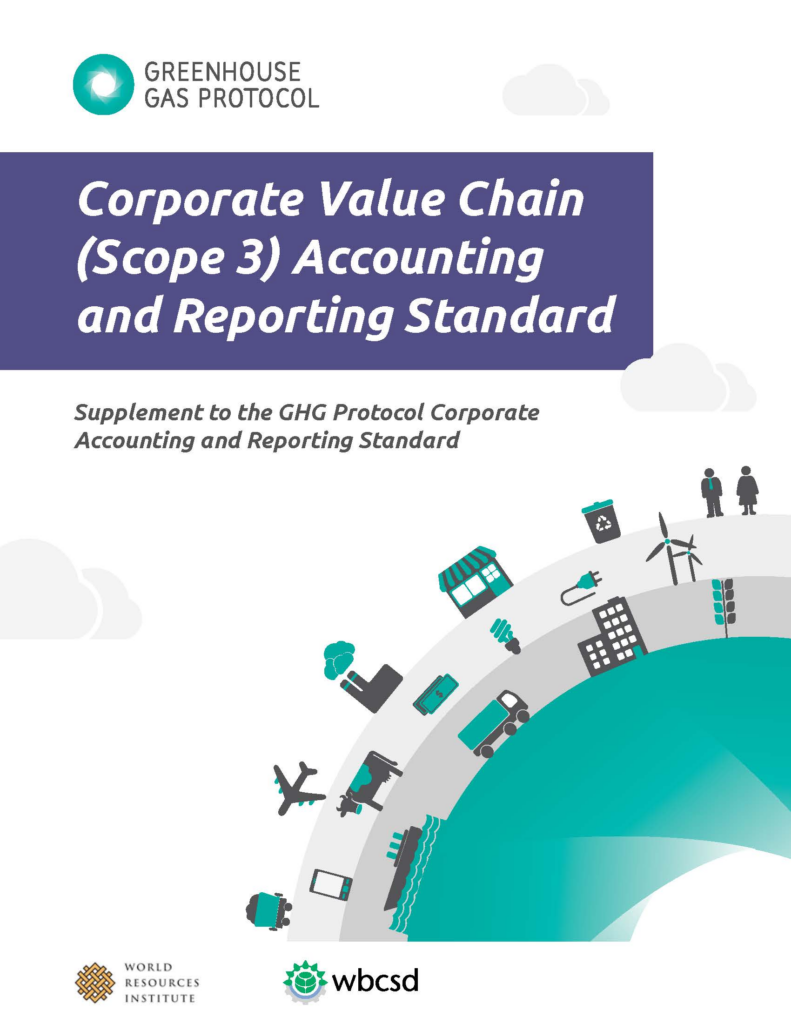
One of the most complex aspects of modern emissions frameworks is the push to measure “Scope 3” emissions—those generated across a company’s entire value chain.
This includes:
- Upstream suppliers
- Downstream customers
- Transportation and logistics networks
- Indirect product use
For many businesses, especially in manufacturing and energy, this creates a nearly impossible task.
Companies are expected to track emissions across networks they do not control, often relying on estimates, third-party data, or inconsistent methodologies.
The consequences include:
- Significant administrative and compliance costs
- Increased legal and reporting risks
- Barriers to entry for smaller firms
- Reduced flexibility in supply chain management
These burdens fall hardest on sectors that are already capital-intensive and globally competitive.
The Economic Impact: Costs, Competitiveness, and Consumers
The economic implications of these frameworks are substantial.
As companies invest in emissions tracking, auditing systems, and compliance infrastructure, capital is diverted away from:
- Research and development
- Workforce expansion
- Facility upgrades
- Production capacity
This has ripple effects throughout the economy.
Higher compliance costs can:
- Reduce margins and investment
- Increase prices for goods and energy
- Weaken U.S. export competitiveness
- Shift production to jurisdictions with less stringent requirements
Ironically, this can lead to worse global outcomes—where production moves to regions with higher emissions intensity, undermining the very goals these frameworks are meant to achieve.
Energy, Security, and Supply Constraints
The stakes are particularly high for the energy sector.
The United States has become a global leader in energy production, helping to stabilize markets, support allies, and reduce reliance on less reliable suppliers.
Frameworks that penalize production—rather than incentivizing efficiency—risk constraining supply at a time of growing global demand.
This has implications not just for prices, but for:
- National security
- Energy security
- Geopolitical stability
Policies that inadvertently limit domestic production can create vulnerabilities that extend far beyond the energy sector.
Why This Matters Now
The effort to harmonize ISO standards with the GHG Protocol is not occurring in a vacuum.
It is part of a broader shift toward globalized regulatory frameworks that increasingly shape domestic policy.
Left unchecked, this trend could:
- Expand regulatory burdens without legislative approval
- Shift policymaking authority away from elected institutions
- Embed flawed measurement systems into economic decision-making
- Increase costs for businesses and consumers alike
A Better Path Forward
International standards can provide value—but only when they remain:
- Transparent in their development
- Grounded in scientific and technical rigor
- Responsive to market realities
- Accountable to the stakeholders they affect
Policymakers should approach ISO-GHG alignment with caution and ask fundamental questions:
- Does this framework reflect real-world production dynamics?
- Does it incentivize efficiency and innovation?
- Does it preserve U.S. economic competitiveness?
- Does it respect democratic accountability?
- Does it reflect the interests of U.S. society and businesses?
- Who is accountable if it does not? When international protocols with real economic consequences are developed outside the U.S. political process, what mechanisms exist to ensure oversight, input, and recourse for American businesses?
- Who is accountable if it does not? When international protocols with real economic consequences are developed outside the U.S. political process, what mechanisms exist to ensure oversight, input, and recourse for American businesses?
If the answer to any of these is no, then adoption should not be automatic.
Conclusion
At the Market Institute, we believe sound policy begins with a simple premise: free markets, guided by transparent rules and accountable institutions, are the most effective drivers of innovation, efficiency, and economic growth.
The current push to align ISO standards with the GHG Protocol moves in the opposite direction. It risks substituting market signals with opaque global frameworks, replacing measurable efficiency with blunt aggregate metrics, and shifting decision-making authority away from American institutions and toward international bodies insulated from democratic oversight.
That is not a recipe for environmental progress—it is a blueprint for higher costs, reduced competitiveness, and constrained innovation.
A better path forward is one rooted in the principles that have long defined American economic success: policies that reward efficiency, encourage production, and allow businesses to compete and innovate without unnecessary interference. Standards should support these goals—not undermine them.
If global frameworks are to play a role, they must be grounded in technical rigor, reflect real-world market conditions, and remain subordinate to the authority of elected policymakers. Anything less risks turning what should be neutral standards into instruments of economic restriction.
The stakes are clear. The question is whether policymakers will choose a system that empowers markets and innovation—or one that quietly erodes them.