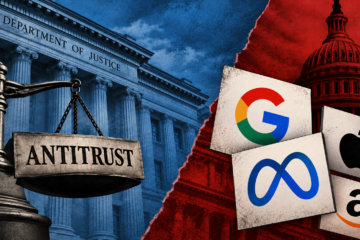
An op-ed by Market Institute President Charles Sauer published in RealClearMarkets argues that the Biden Administration’s aggressive antitrust agenda under Lina Khan and Jonathan Kanter ultimately harmed consumers, reduced competition, and increased government interference in the economy.
Sauer writes that the Neo-Brandeisian approach to antitrust enforcement focused more on punishing size and consolidation than improving outcomes for consumers.
“Khan’s aggressive approach to antitrust policy can actually make markets less competitive, thus making it unlikely that goods and services will become more affordable.”
The piece highlights the Federal Trade Commission’s successful effort to block the proposed merger between Kroger and Albertsons, arguing that regulators ignored competition from major retailers like Walmart while preventing the grocery chains from achieving efficiencies that could have lowered prices.
“A Kroger-Albertsons merger would not affect Walmart’s dominion of the grocery market. What it would do is allow Kroger and Albertsons to use economies of scale to increase efficiency and thus lower prices.”
Sauer also criticizes Khan’s attempt to revive enforcement of the Robinson-Patman Act, describing it as an outdated policy tool that punishes companies for offering lower prices to large-volume retailers.
“The last time the FTC sued a business for violating Robinson-Patman was in 2000. That’s because antitrust enforcers realized it was not good policy to sue businesses for the crime of keeping prices low.”
The article also points to the Justice Department’s decision to block the JetBlue-Spirit merger as a major policy failure, noting that Spirit later collapsed despite regulators claiming the merger would reduce competition.
“Now, Spirit is out of business.”
Sauer concludes with a warning that if Democrats regain power in Washington, Khan’s influence over antitrust and economic policy could grow even stronger.
“This would increase government’s role in the economy, raising prices and crippling innovation. The only upside is that this might finally discredit the notion that we can regulate our way to prosperity.”
Read more in RealClearMarkets by clicking here.